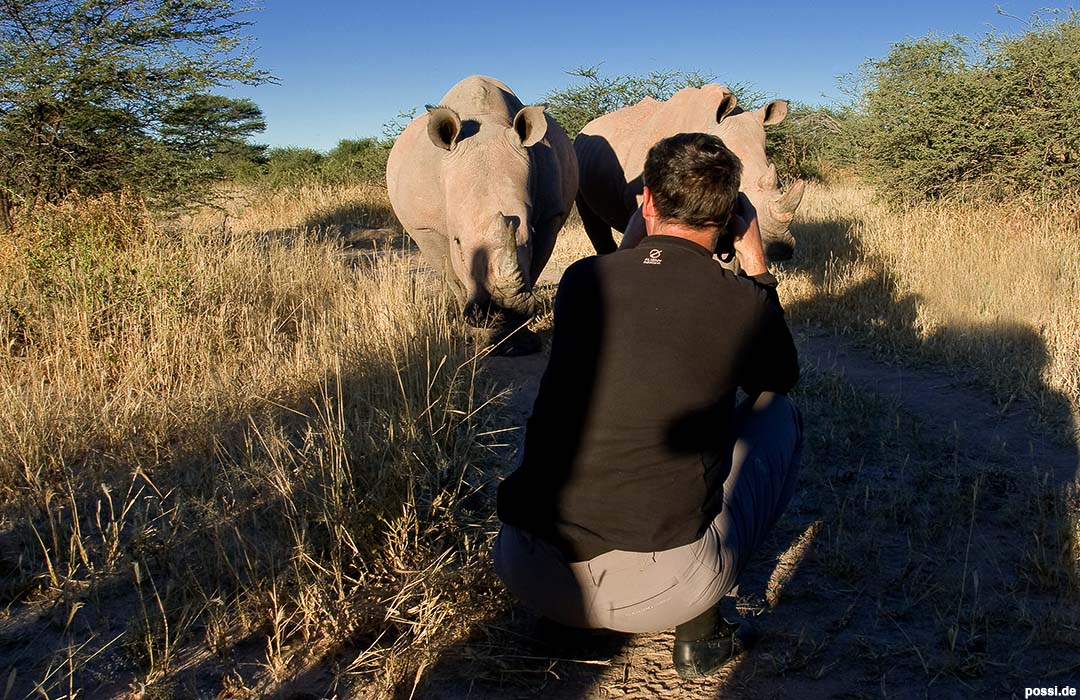
After over 30 years of shooting on film, in 2005 digital photography finally replaced my analogue equipment. On my South America tour I had already brought a small DSLR (Pentax *ist) along with my 6×7 medium format camera, and in 2004 in Madagascar I had worked exclusively digital.
A brief history of my cameras:
- 1972 Rollei 35
- 1975 Pentax ME super
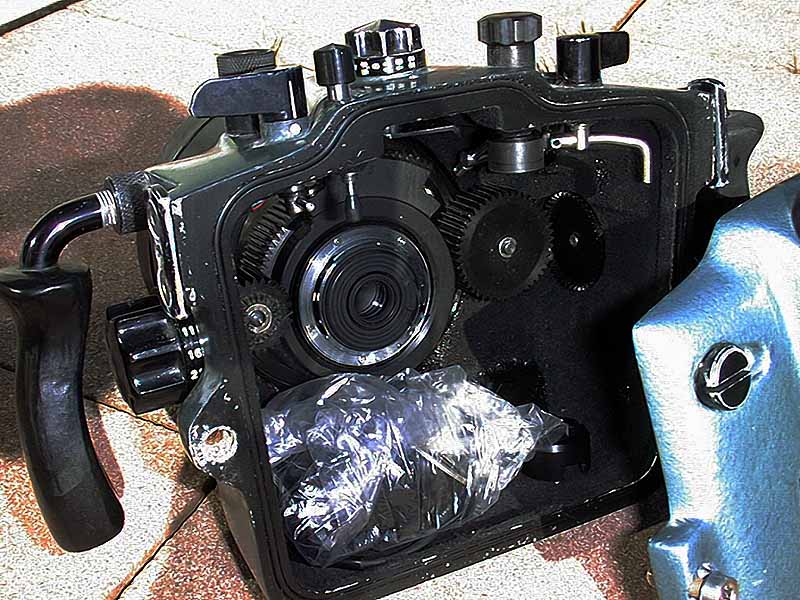
- 1980 Pentax LX interchangeable-viewfinder system camera, used for 20 years (also in Hugyfot aluminium diving housing)
- 1998 Agfa ePhoto 1280 (quite innovative at the time – digital with 0.8 megapixels!)
- 1999 Nikon Coolpix 950 (3× zoom, 2 megapixels)
- 2000 Mamiya 7 and Mamiya 7II (analogue 6×7 medium-format rangefinder system camera)
- 2001 Pentax 67II (analogue 6×7 system SLR)
- 2001 Nikon Coolpix 5000 (digital camera with 3× zoom and 5 megapixels – already genuinely useful)
- 2003 Nikon Coolpix 5700 (digital bridge camera with 8× zoom, also 5 megapixels)
- 2004 Pentax *istD (DSLR, 6 megapixels)
- 2005 Canon EOS 1Ds Mark II (high-end DSLR, full frame, 16 megapixels)
- 2005 Sony R1 (bridge camera with APS-C sensor, outstanding 5× Zeiss wide-angle zoom – unfortunately not the fastest camera)
- 2006 Panasonic LX1 (digital widescreen pocket camera, 8 megapixels)
- 2007 Canon G9 (digital compact rangefinder with RAW)
- 2008 Canon EOS 1Ds Mark III (high-end DSLR, full frame)
- 2009 Canon EOS 5D Mark II (high-end DSLR, full frame; often my primary camera when compactness matters; backup on long-haul trips)
- 2009 Canon G11 (digital compact rangefinder with RAW)
- 2012 Canon G1X (rangefinder with large sensor – unfortunately bulky and slow; later swapped for the Sony RX100)
- 2012 Canon 5D Mark III (high-end DSLR; replaced the Mark II and the 1Ds Mark III – lightning-fast autofocus, though barely any improvement in dynamic range)
- 2012 Sony RX100 (compact with genuinely impressive image quality thanks to its larger, high-grade sensor)
- 2013 Sony A7R (bought on eBay – in every respect, especially dynamic range, a significantly better sensor than the Canon 5D3; very few lenses available in 2013, however)
- 2014 Panasonic GM1 (ultra-compact MFT system camera with purely electronic shutter – extremely light, fast, and excellent for time-lapse)
- 2015 Sony A7R II (42 megapixels, high resolution and dynamic range)
- 2018 Sony A7R III (42 megapixels, high resolution and dynamic range, larger battery, better autofocus and ergonomics)
- 2019 Sony RX100 Mark VI (the ultimate ultra-light pocket camera with a 1-inch sensor and 24–200 mm equivalent focal length)
- 2019 Sony A7R IV (61 megapixels, extremely high resolution and dynamic range, larger battery, better autofocus and ergonomics – a true dream camera, and lightweight!)
As keepsakes I still have my grandfather's Rollei 35 and the 1980 Pentax LX in its diving housing. For actual photography I rely on my full-frame Sony as the workhorse, and regularly on the small Sony RX100VI as well.
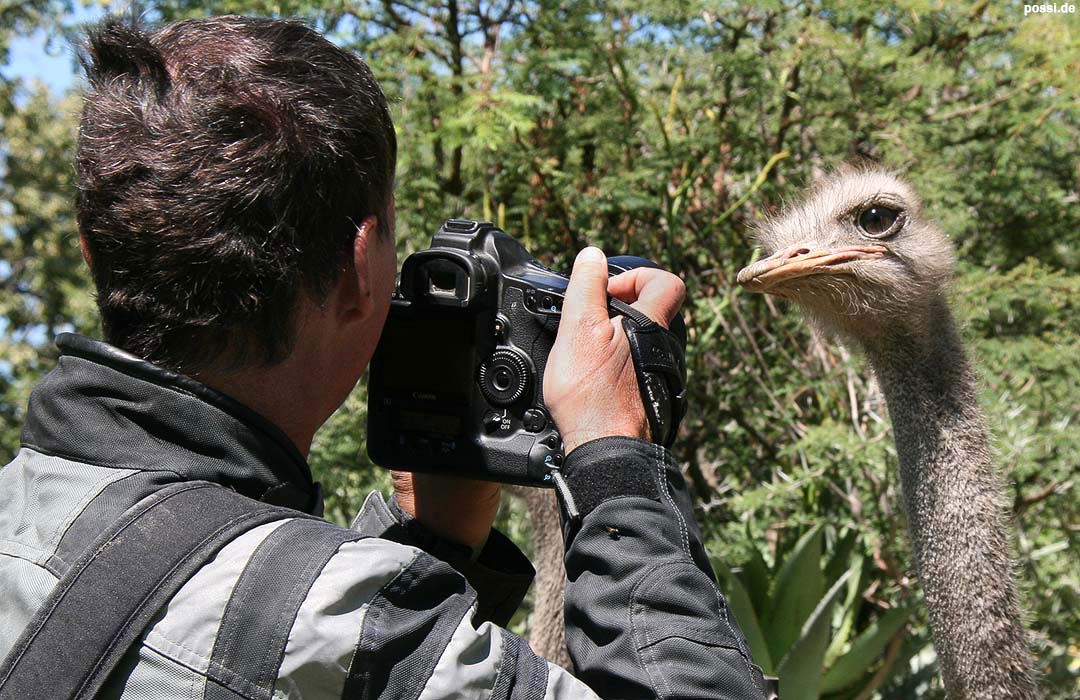
The focal lengths I have available for my Sony full-frame camera (my motorcycle-friendly standard travel set is 12–24, 24–105, 100–400 mm):
- Sony FE 12–24mm G (versatile high-quality ultra-wide-angle)
- Sony FE 24–105mm G (excellent walk-around normal zoom)
- Laowa 15mm f/2 (fast manual ultra-wide for night shots)
- Sony FE 24mm f/1.4 GM (very light, fast wide-angle for interiors and night shots, excellent quality)
- Sony FE 55mm f/1.8 Zeiss Sonnar T* (very compact, light, fast normal lens for interiors and night shots, excellent quality)
- Sony FE 85mm f/1.4 GM (very fast portrait telephoto, excellent quality)
- Sony FE 90mm f/2.8 Macro G (brilliantly sharp macro up to 1:1)
- Sony FE 135mm f/1.8 GM (light, fast universal telephoto, excellent quality)
- Sony FE 100–400mm GM (brilliantly sharp telephoto zoom)
- Sony FE 200–600mm G (brilliantly sharp long telephoto zoom for travel)
- Sony FE 600mm f/4 GM (acquired at a very attractive price from a Regensburg dealer who wanted to reduce inventory – brilliant for wildlife photography and astro images)
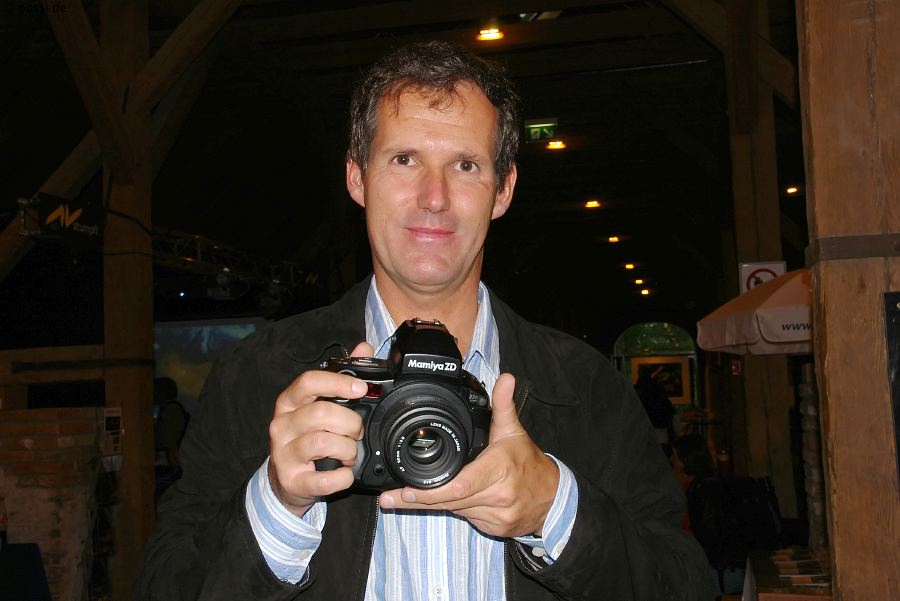
In autumn 2004 I had the opportunity to try a pre-production model of the Mamiya ZD for a while. Many thanks to the team at Mamiya in Munich who patiently answered all my questions. This camera was the first fully integrated digital medium-format camera – not merely a digital back bolted on afterwards. This camera fits with 4 lenses into a mini camera backpack from Lowe which I converted as a zip-on top to my tank bag. My first impressions with a pre-production model are described here.
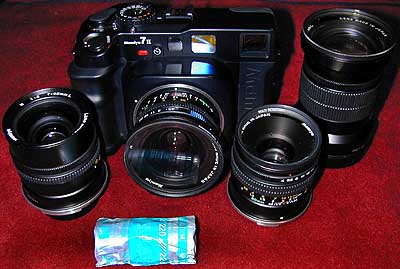
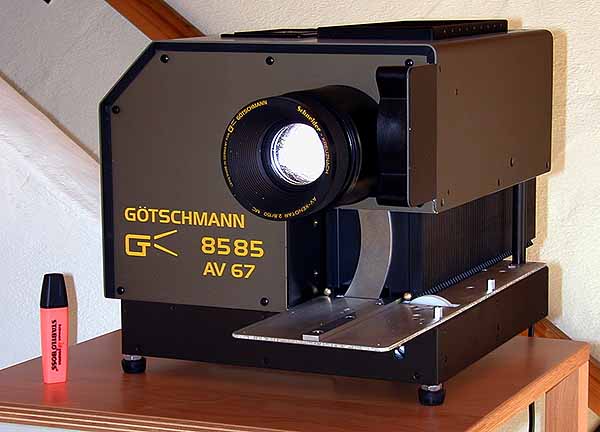
Since spring 2000 this has been my analogue medium-format rangefinder camera – a 6×7 rangefinder from Mamiya. Not cheap, but after 20 years of 35mm I was aiming for an improvement. Digital is fine, but at that time it only degraded the images. Besides, there is simply no substitute for a wall-filling slide projection – least of all a medium-format projection. For that I use a Götschmann 6×7 projector. Götschmann is a very active company and the only manufacturer of such projectors in the world. The light volume, colour brilliance, and sharpness are simply stunning and make 35mm projection pale in comparison. The effort is considerable, though: glass-mounting slides by hand is laborious, the magazines are heavy and unwieldy.
This 6×7 camera is extremely light and compact. With 3 lenses (43mm super-wide, 80mm normal, 150mm tele) I end up with only 2.2 kg in a very compact camera bag that still leaves half of my (small) tank bag on the enduro free. For longer trips I added a 65mm wide-normal. The aluminium-foil-sealed film rolls are no more bulky than 35mm cassettes (see the foreground of the photo on the right). I use 220 film, which gives 20 exposures per roll in 6×7 format. My favourite is Fuji Velvia, which I had used for years in 35mm with excellent results. Also very good is Fuji Provia 400F, which delivers excellent results with pleasing, pastel-toned colours even indoors or in very poor outdoor light.
The image quality at 6×7 is simply breathtaking. The first time I saw a projection I was speechless. I now do without fisheye, macro, and long tele that 35mm offered me – photographically that is manageable. It is simply a joy to view these enormous slides on the light table. Everything is visible to the naked eye, and even more with a loupe …
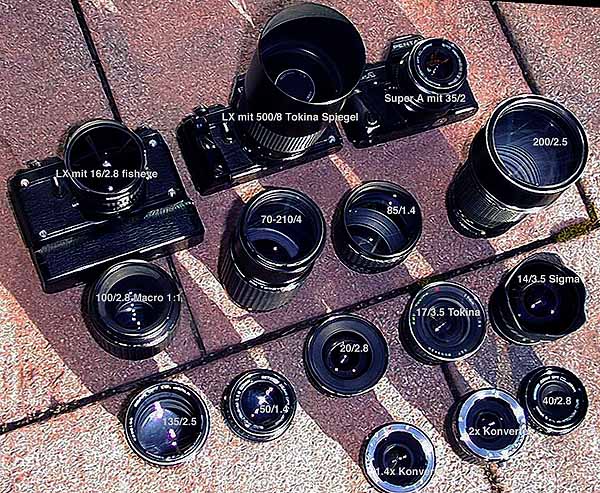
My old SLR equipment is rather unremarkable. With these cameras I photographed for 20 years! They are several Pentax models up to 20 years old (Pentax was the most affordable name brand during my student days): the ME super, SuperA, ME, and LX (the "professional model"). All are mechanical or electromechanical and work without batteries if you estimate exposure. The LX is in many ways an unrecognised genius – it had features unique in their combination at the end of the 1970s: automatic exposure, forward/reverse frame counter with 0.1 mm precision, TTL flash metering, interchangeable viewfinder (e.g. sports finder with 45-degree viewing angle), excellent weather sealing with O-rings on all shafts and openings, armour-strength aluminium die-cast body – all in a relatively light and elegantly compact package. Compare that with the contemporary Nikon F2, which was shapeless and twice as heavy.
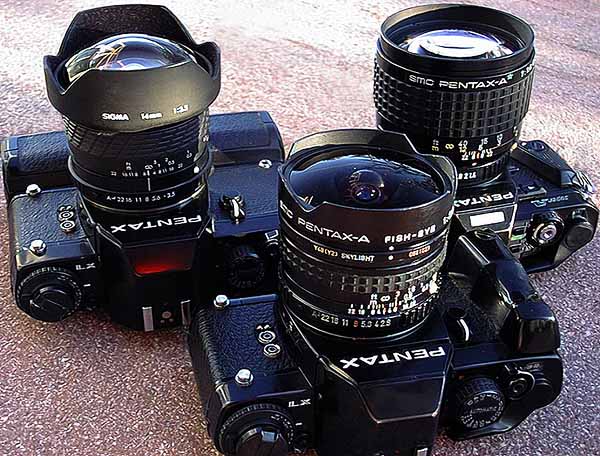
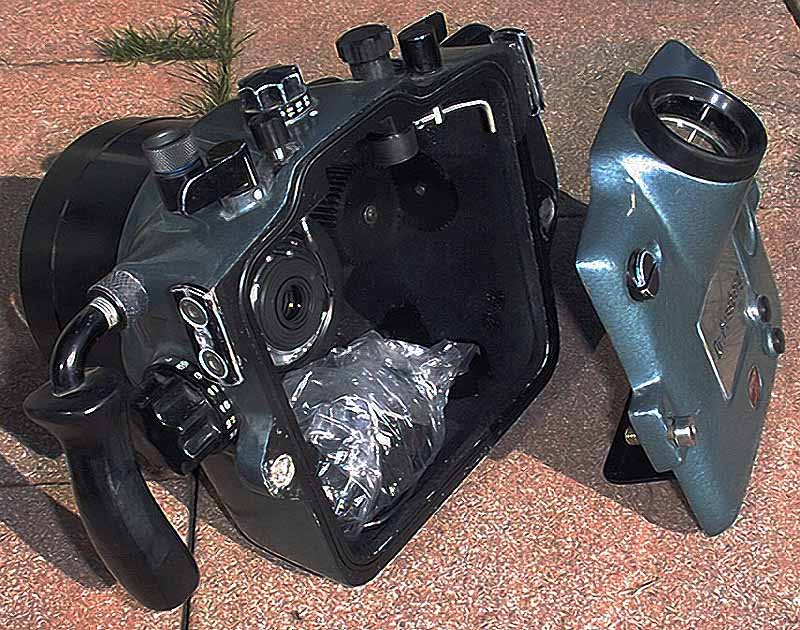
Thanks to the 45-degree viewfinder attachment, the LX – still hand-assembled even today – is uniquely suited to underwater photography. Swimming, you naturally look forward and slightly downward, which is exactly the viewfinder angle. The legendary Hugyfot underwater housing, designed by René Hugenschmidt of Küsnacht on Lake Zurich, makes perfect use of this. Through a clever gear mechanism and interchangeable tubes, the most diverse optics can be used down to 200 m depth. By chance I bought it second-hand at a good price from a noted underwater photographer who has written several fish identification books.
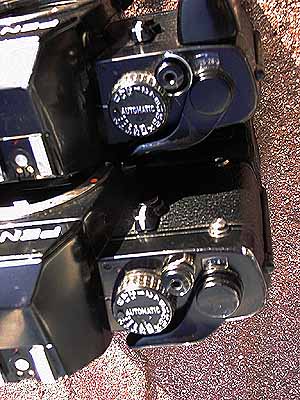
The LX underwent one revision during its 20-year production run (sadly discontinued in 1999) in which a few details were improved, most notably the pawl on the wind-lever. The later version is distinguishable from the original by the disc-shaped widening of the switch lever at the shutter release (the upper camera in the photo). At launch in 1979 a LX cost about DM 1,300; later around DM 2,500. These cameras are now only available used, and many are unfortunately quite worn – they were treated as tools, not collector's items. Good examples fetch DM 1,000–1,200 when you can find one. The SuperA and the ME are much cheaper but still very light and reliable – I have made just as many fine photographs with them.
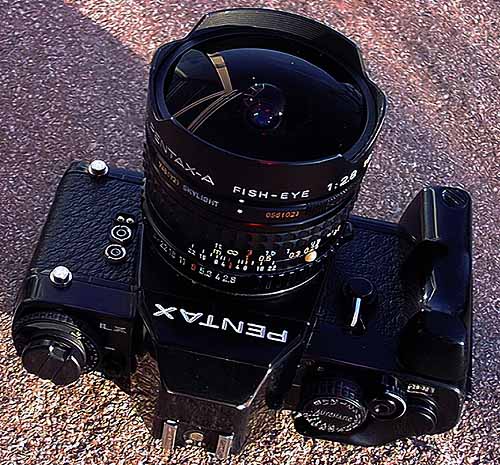
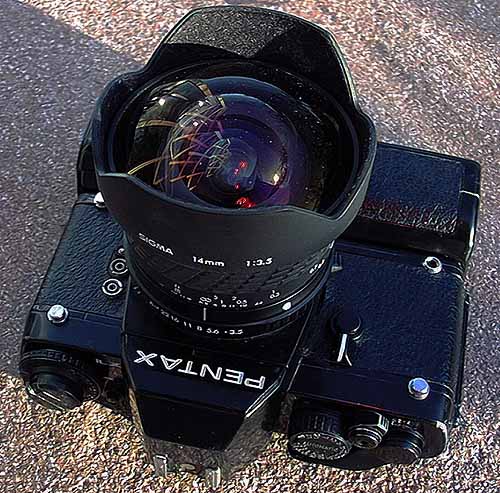
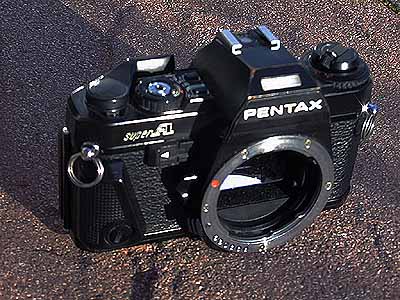
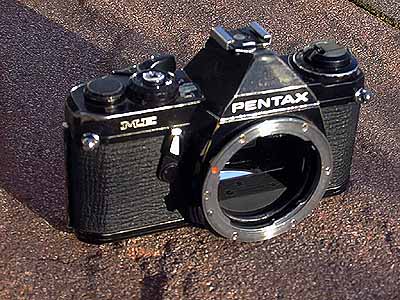
Modern autofocus cameras are appealing, but I doubt they would survive the rigours of off-road travel; besides, the good models are very expensive, especially the specialist lenses I want. So I stuck with my battle-tested old metal machines …
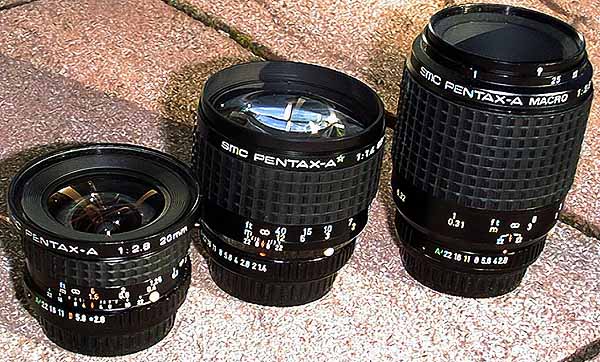
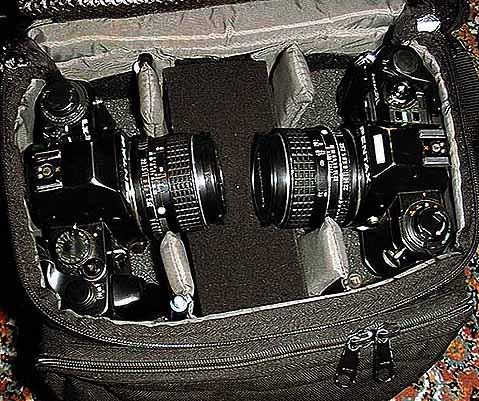
My complete equipment lives in a modified, relatively compact Tamrac camera bag that also fits inside a small enduro tank bag. The advantage is that I can remove the whole system as one unit when I leave the motorcycle or continue on foot. The then largely empty tank bag can stay on (except in Africa or India, where desperately poor children really will steal anything). From closed-cell foam I cut strips that separate the first layer in the camera bag – lenses and accessories – from the second layer with the always-ready cameras, keeping everything shake-proof.
The lenses I take should not be too heavy. Zooms kept breaking on me under extreme conditions (vibrations, dust, rough handling), so I abandoned them (except in the underwater housing). The image quality in projection – with a quality projector (I use a Leitz Pradovid) – is simply optically inferior with zooms. This shows most at open aperture in the extreme positions (especially wide-angle), and the barrel or pincushion distortion (again mainly in the wide-angle range) can be distracting with straight lines such as building edges. The final argument against zooms is their low maximum aperture. An aperture of f/2.0 or f/2.8 helps not only in poor light but is also clearly more precise for focusing – even for autofocus. As a travel photo enthusiast I prefer wide-angle lenses, and quite a collection has accumulated over the years.
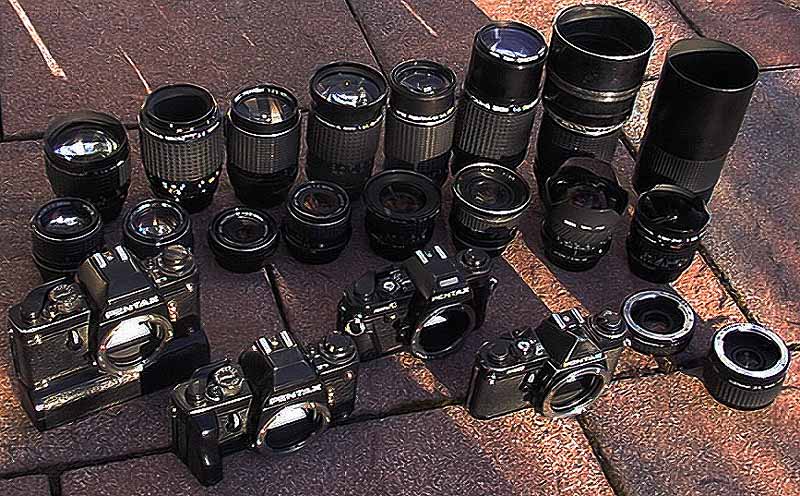
A typical comfortable travel kit might consist of:
- 2–3 camera bodies with 50 ASA and 200 ASA slide film
- f/2.8 / 16mm fisheye
- f/2.8 / 20mm super-wide-angle
- f/2.0 / 35mm standard wide-angle
- f/1.4 / 50mm normal lens
- f/2.0 / 85mm portrait, light telephoto
- f/2.5 / 200mm long telephoto
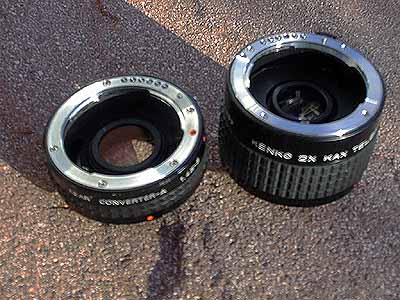
- 1.4× converter (extends telephoto focal lengths with modest quality loss)
- Close-up filter
- Small TTL flash (GN 20)
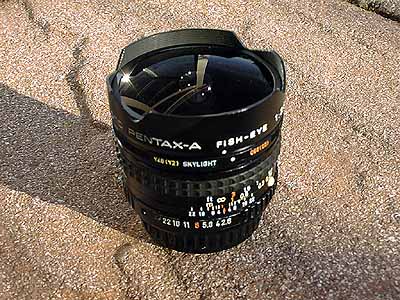
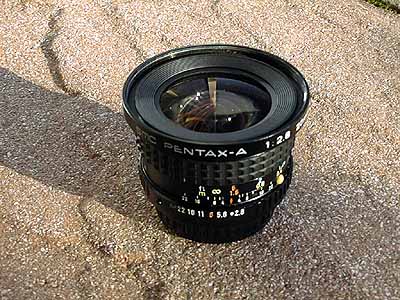
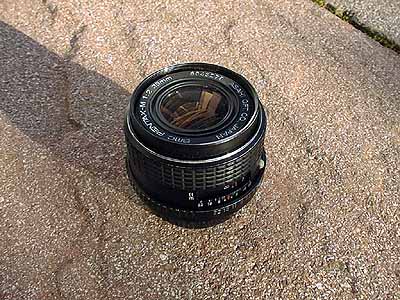
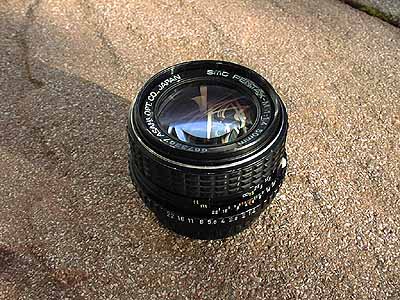
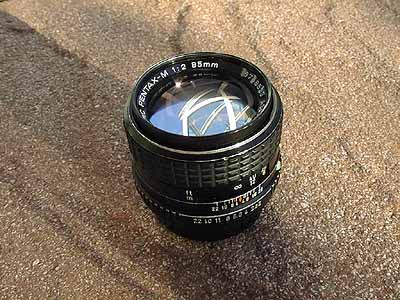
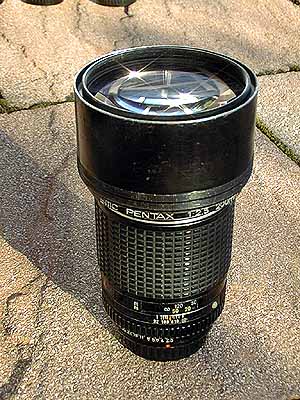
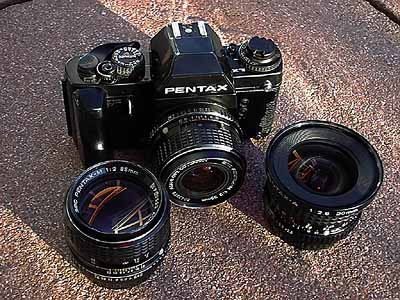
A lightweight 3-lens set (covering more than 90% of all subjects) might be:
- 1–2 camera bodies with 50 ASA slide film
- f/2.8 / 20mm super-wide-angle
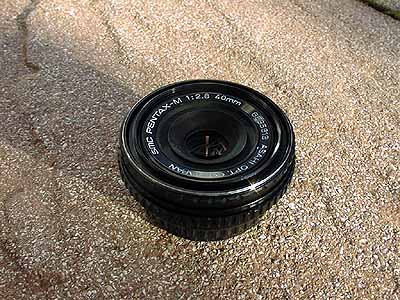
- f/2.0 / 35mm standard wide-angle or f/2.8 / 40mm ("the pancake lens" – weighs almost nothing)
- f/2.0 / 85mm portrait, light telephoto
- Close-up filter
Of course four-lens variants or a minimal two-lens set are also possible, with a corresponding smaller bag. I take something like that on short enduro tours in Slovenia etc.
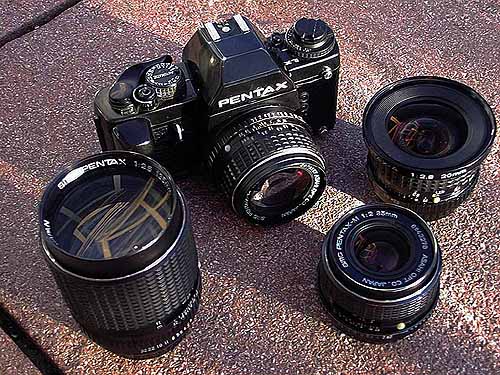
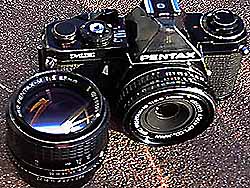
All lenses are originals. Over the years I tried various third-party brands but was never entirely happy with their durability or, especially, their differing colour rendition. An original Pentax prime lens has never failed me. Only the f/2.5 / 200mm goes off to Pentax every few years for laser measurement and readjustment – they do it quickly and inexpensively. Unlike Nikon or Canon, they turn it around in one to two weeks. It's a shame that Pentax, such a storied company, now only offers mainstream products.
Film: On my extreme Sahara trip in April 1996 I took 60 slide films – 40 Fuji Velvia (50 ASA) and 20 Fuji Sensia (200 ASA). In Morocco I used Kodak Elite – very fine-grained, but Fuji's colours are simply fresher. That said, nobody should think that good photos come from shooting an endless number of films! Quite the opposite: great photos result from carefully selecting the subject beforehand – in your head, not through the viewfinder!
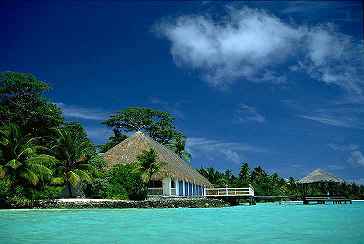
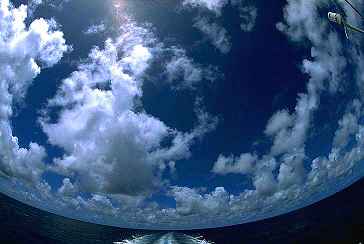
A few simple tips for good shots: isolate the subject, i.e. include no image-irrelevant clutter. Don't cut anything off – either show the whole subject or deliberately choose a cropped detail. Pay attention to the surroundings – every element in the frame should matter to the image; scan the entire viewfinder for this. Use wide-angle and get close. Or use a telephoto and separate the subject with shallow depth of field. Use a polarising filter to boost sky colours. For action shots take several frames; imagine the action moment in advance, pre-focus there, and – very importantly – keep clutter out of the frame here too. Shoot from different angles, no repetitions: they waste film and produce identical pictures. What already looks poor in the viewfinder looks even more boring in the final image. Use effects (like the fully upward-tilted fisheye shot of a ship's stern wave shown here) sparingly! And most importantly: throw away at least 50% afterwards – otherwise the slide evening will be unbearably tedious.